Strøget Copenhagen: the pedestrian shopping street & side streets (2026)
Ways to shop and explore Strøget
Food tour on Strøget & Old Town
Guided 3.5-hour walking food tour sampling local cuisine, pastries, and coffee. Covers Strøget, Gamla Stan, and Amagertorv. Includes 5 to 6 tastings and insider tips on the best independent shops and cafes.
Check ticketsSelf-guided or group walking tour
Walk Strøget on your own (20 to 30 minutes for the full street) or join a 2-hour guided tour covering Copenhagen’s shopping history, the street’s transformation since 1962, and the side streets.
Check ticketsCity pass (24 h)
The 24–120 h card includes entry to 80+ attractions and all public transport. Strøget itself is free, but the card covers nearby castles and museums paired with a shopping visit.
Check ticketsBike tour of the city centre
A 2- to 3-hour guided bike ride covering Strøget, the Latin Quarter, Christiansborg, and waterfront areas. Faster than walking, covers more ground, includes stops and stories.
Check ticketsThe main Strøget is chains; the real finds are on the side streets. Spend 30 to 45 minutes walking the main drag (window shopping, major stores), then dive into Fiolstræde (books, records, vintage) or Lavendelstræde (independent cafes and design shops). Weekdays are quieter; avoid Saturday afternoons.
Highlights
- Global chains on the main street — H&M, Zara, Nike, Mango, Apple, Pull & Bear, and all the usual suspects.
- Fiolstræde side street — used and vintage bookshops, record shops, quirky cafes, and second-hand clothing.
- Lavendelstræde side street — independent cafes, design shops, jewellery, and slower-paced shopping.
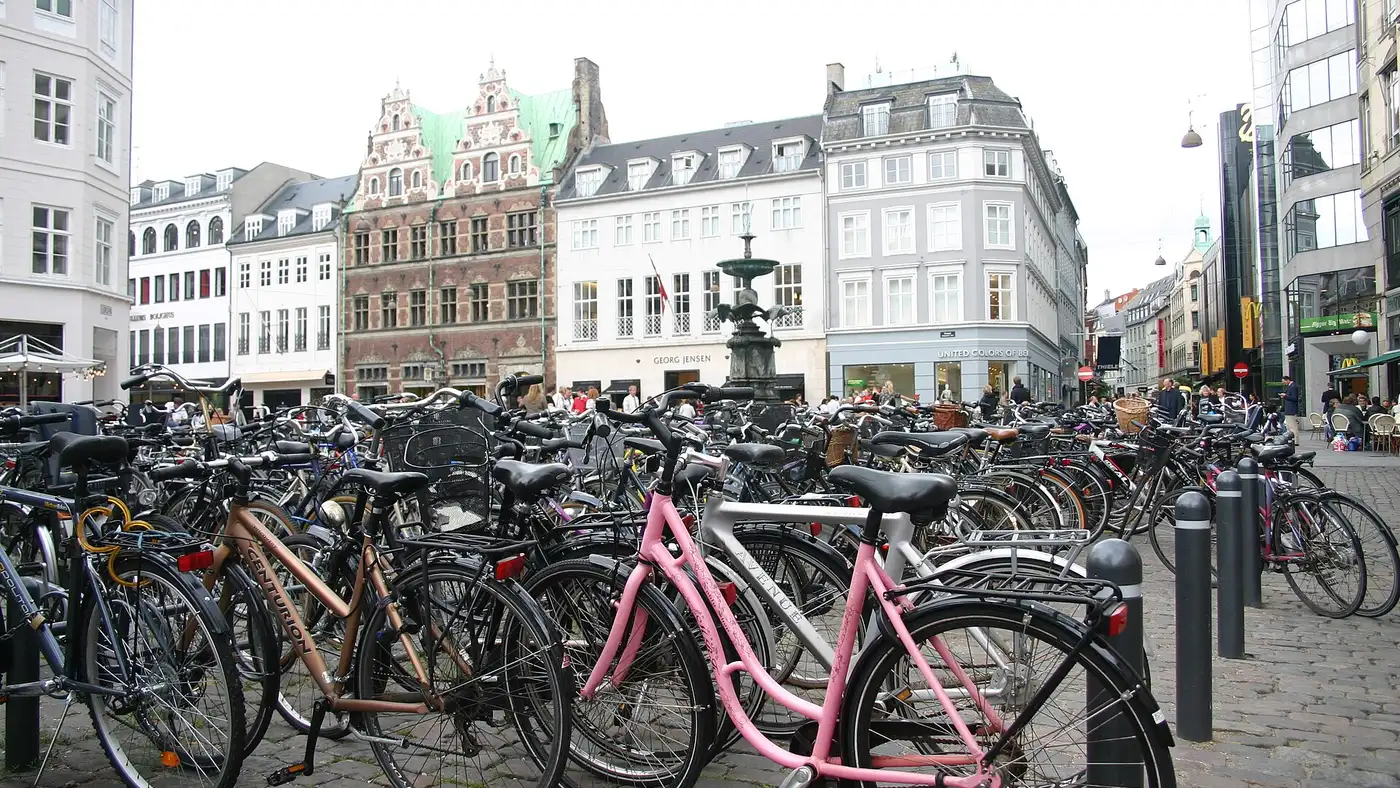
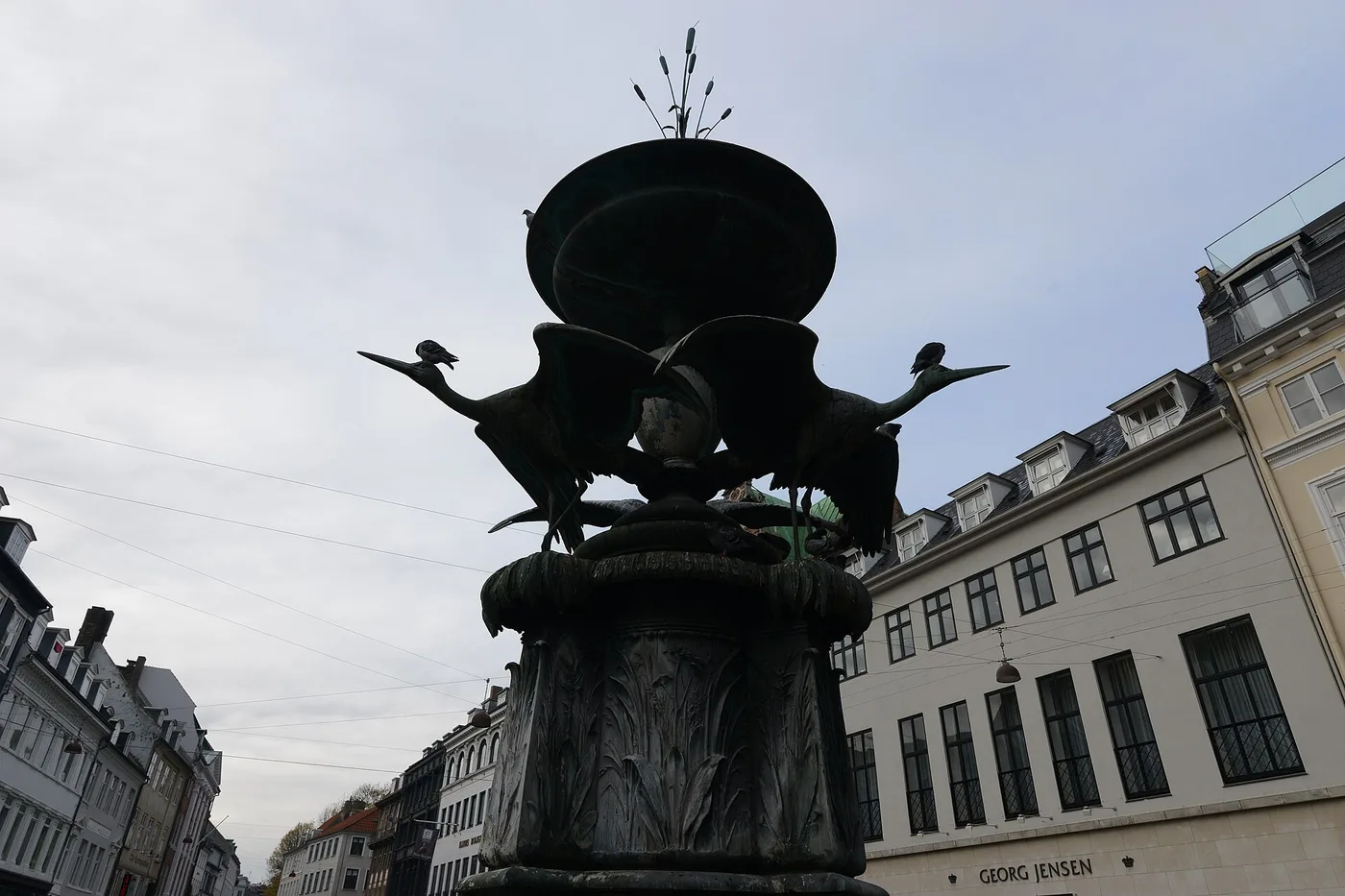
- Storkespringvandet fountain — a 1921 stork fountain on Amagertorv (middle of Strøget), a meeting point and photo spot.
- Royal Copenhagen and Georg Jensen flagships — Danish design and luxury goods (pricey, but iconic).
What to see and shop on Strøget
Strøget is the commercial spine of central Copenhagen and one of Europe’s busiest pedestrian shopping streets. The street runs 1.1 km from Rådhuspladsen (City Hall square, west) to Kongens Nytorv (east, near Nyhavn), passing through four historic public squares: Gammeltorv, Nytorv, Amagertorv, and Kongens Nytorv. Each square has its own character and history. Below are the major shopping zones and the hidden side streets where Copenhageners actually shop.
The main street: chains and flagships
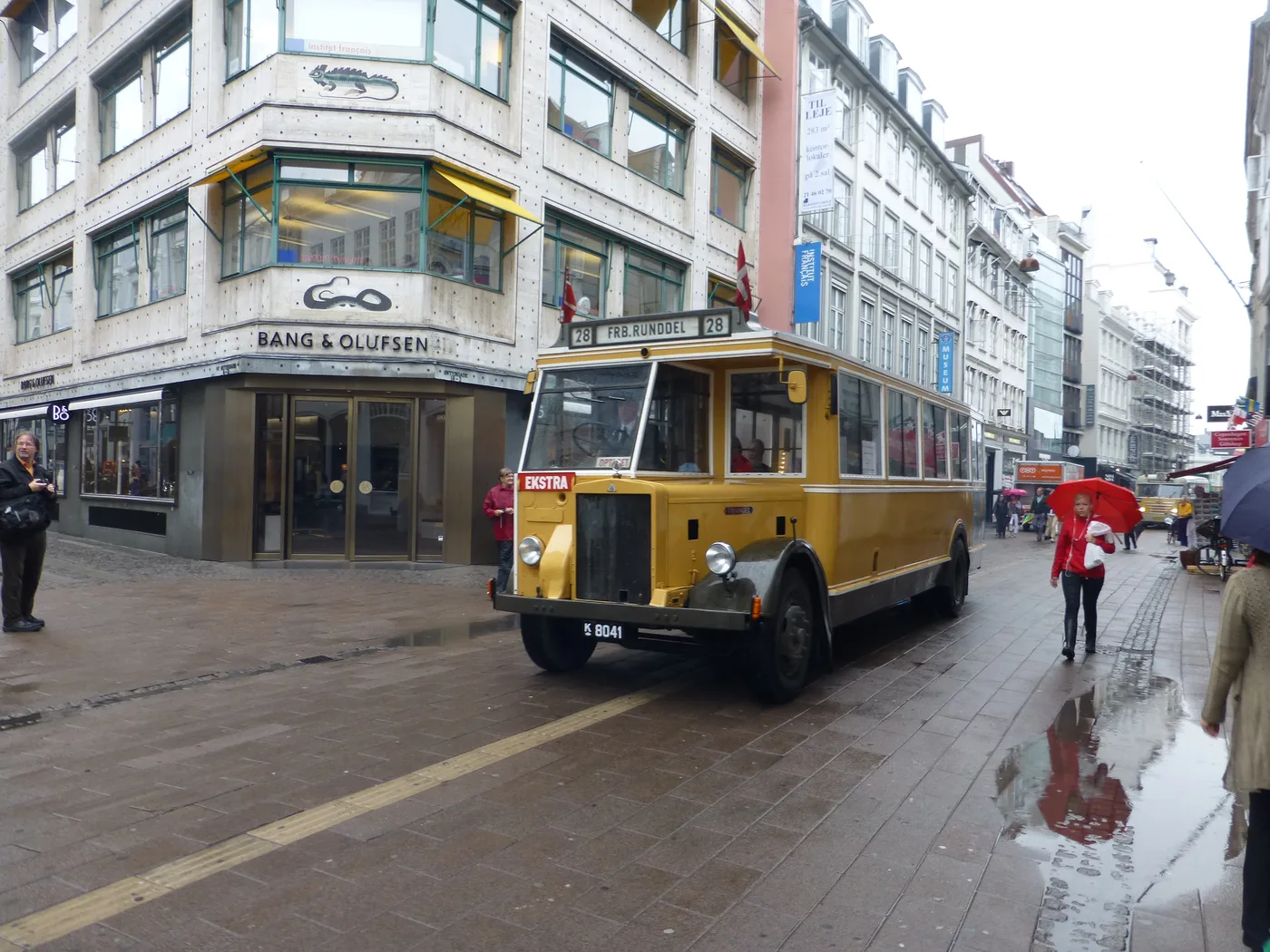
The main Strøget is lined with fast-fashion chains: H&M (budget fashion), Zara (contemporary), Nike (sports), Mango, Pull & Bear, COS, and others. Illums Bolighus (luxury interior design) and Royal Copenhagen (porcelain and tableware) are the pricey flagships. Georg Jensen (jewellery, EUR 100+) sits on a side street. Politikens Boghal is the largest bookstore in Denmark. Apple Store is busy; expect long lines. The street was pedestrianized in 1962 and was one of Europe’s first car-free shopping streets. Today it feels like any European shopping street: busy, commercial, and full of tourists.
Fiolstræde: books, records, and vintage
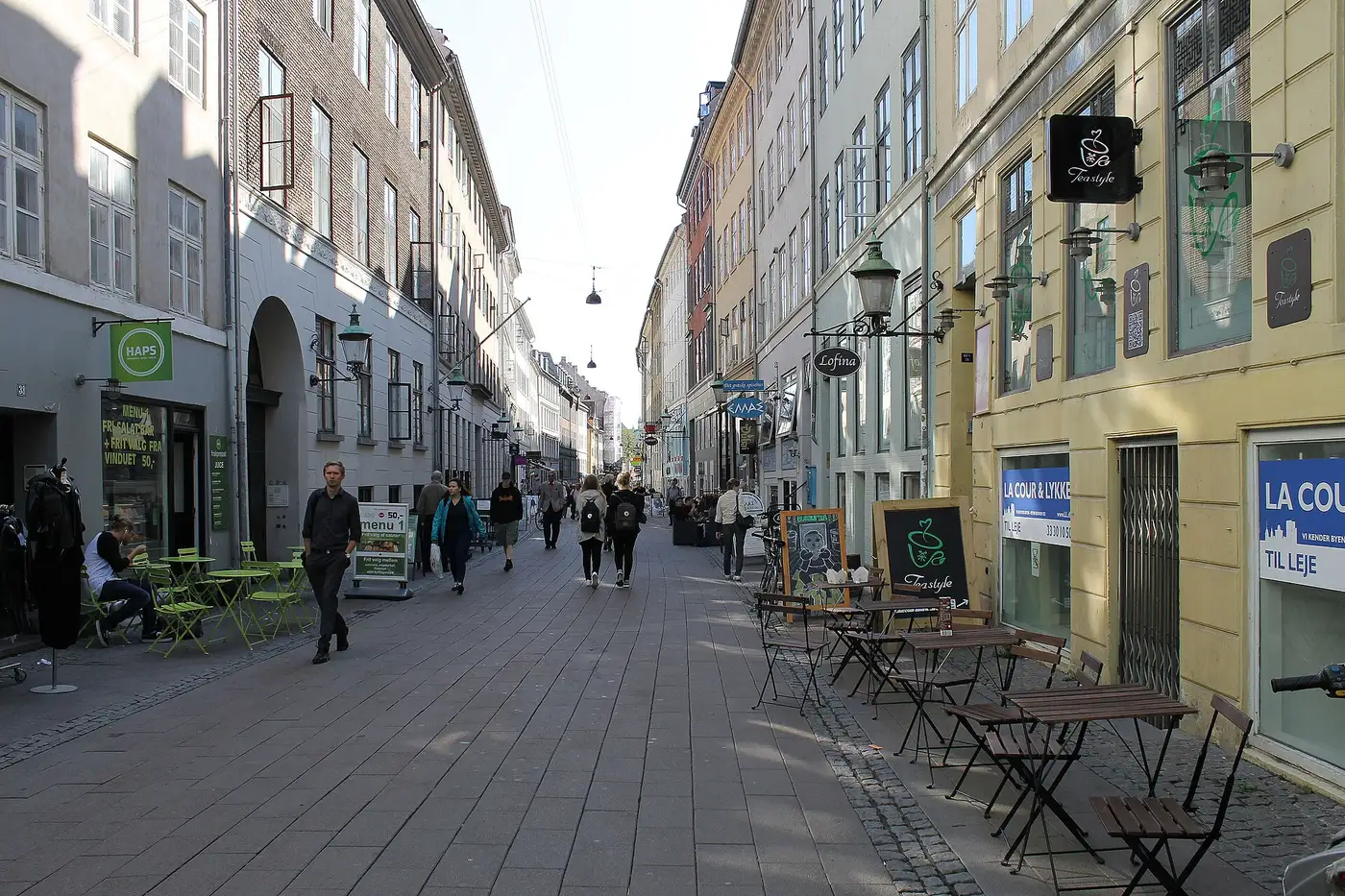
Fiolstræde branches north from Strøget at Amagertorv. It is lined with independent bookshops (new and used, including children’s and rare books), record shops (vinyl and CDs), vintage clothing stores, and cosy cafes. Paludan Boghandel is a beloved used bookshop. Bent Fender sells vintage music and records. This street has personality. Coffee is cheaper here (EUR 4 to 5) than on the main street (EUR 5 to 6). Allow 30 to 45 minutes.
Lavendelstræde and the Latin Quarter
Lavendelstræde (and the broader Latin Quarter) branch south from Strøget near Gammeltorv. The cobblestone streets here are lined with independent cafes, design shops, second-hand boutiques, and restaurants. This area feels more authentically Copenhagen than the main street; locals actually spend time here. Strædet (the street name means "the street") is the spine, lined with small shops. Expect to linger in cafes and boutiques. Prices are higher than chain stores, but quality is better.
What things cost on Strøget
| Item | Price | Notes |
|---|---|---|
| Coffee (one cup, chain) | EUR 5 to 6 | Chains on main street; cheaper (EUR 4 to 5) on side streets |
| Coffee (independent cafe, side street) | EUR 4 to 5 | Better quality, slower pace, better atmosphere |
| Lunch (sandwich, salad, burger) | EUR 10 to 18 | Many casual options; pricier on the main street |
| Shirt (H&M) | EUR 20 to 35 | Fast fashion, quantity over quality |
| Jeans (Zara or COS) | EUR 50 to 80 | Contemporary quality |
| Luxury item (Royal Copenhagen porcelain) | EUR 50 to 500+ | Premium Danish design, expensive |
| Jewellery (Georg Jensen) | EUR 100+ | Iconic Danish brand, very pricey |
| Vintage book (Fiolstræde) | EUR 5 to 25 | Depending on age and rarity |
Best time to go
| Time of day / Season | What to expect |
|---|---|
| Weekday morning (10 a.m.–1 p.m.) | Quiet, shop staff available, clear sight lines, relaxed browsing. |
| Weekday afternoon (1–4 p.m.) | Moderate crowds, good light, some tour groups, still manageable. |
| Weekday evening (4–8 p.m.) | Locals shopping after work, busier, but still doable; shops close around 8–10 p.m. |
| Saturday midday | Peak crowds, families, chaos, very slow browsing. |
| Sunday (limited hours) | Quieter (many shops close), reduced selection, good if you want peaceful shopping. |
| May to September | Peak season, crowded, especially near the fountain and major stores. |
| October to April | Quieter, colder, December is busy (Christmas shopping + tourists); January to March is less crowded. |
How much time to spend
20 to 30 minutes to walk the entire 1.1 km street (no shopping). 45 to 60 minutes for casual window shopping and a coffee. 90+ minutes if you seriously shop or explore the side streets. Most visitors spend 45 to 90 minutes on Strøget + side streets, then move to nearby attractions (Tivoli, city centre, castles).
Getting to Strøget
By metro or bus
Metro M1, M2, or M4 to Rådhuspladsen (west end of Strøget) or Kongens Nytorv (east end, also near Nyhavn). Journey from most neighbourhoods: 5 to 15 minutes.
On foot or by bike
From Tivoli Gardens (5 to 10 minutes west). From Nyhavn (10 minutes east via Kongens Nytorv). From the city centre, Strøget is the city centre — start here. Bike racks are plentiful; many riders use Strøget as a through route.
Dos and don’ts
Do
- Explore the side streets (Fiolstræde, Lavendelstræde, Strædet); they have character and better shops.
- Visit on a weekday morning if possible; Saturdays are mayhem.
- Stop at a side-street cafe for coffee and people-watch; it’s the local way.
- Check out the Storkespringvandet fountain on Amagertorv (mid-street); it’s a historic meeting point.
- Wander the Latin Quarter (south of Strøget); it’s the real Copenhagen.
Don’t
- Don’t plan your whole Copenhagen visit around shopping; Strøget is fun but it’s just chains.
- Don’t come on Saturday afternoon; it’s overcrowded and unpleasant.
- Don’t expect bargains or unique Danish stuff on the main street; it’s global chains.
- Don’t skip the side streets thinking the main street is all there is.
- Don’t expect customer service in crowded shops; be patient and wait your turn.
Where to eat on and around Strøget
On Strøget itself: fast-food chains (Subway, McDonald’s, etc.) and chain cafes. Expect EUR 10 to 20 for a meal; quality is mediocre and service is slow during peak hours. Avoid eating here if possible — the shops are crowded and the seating is limited. The exception: quick coffee stops in cafe chains (EUR 5 to 6).
Fiolstræde side street: cosy, characterful independent cafes, better coffee (roasted locally), pastries, and vintage atmosphere. EUR 5 to 12 for a light meal. This is where locals eat.
Lavendelstræde & Latin Quarter: a mix of casual restaurants (pizza, burgers, Mediterranean) and independent cafes; EUR 12 to 25 for a full meal. Atmosphere is far better than the main street; expect cobblestone streets, flowers, and a slower pace.
Amagertorv square (on Strøget, mid-street): the main tourist meeting point, with tables overlooking the Storkespringvandet fountain. Pricey (EUR 15 to 30) and crowded, but the fountain view is picturesque and worth a coffee or drink.
Specific recommendations: Paludan Boghandel Cafe (attached to a beloved used bookshop, vintage seating, excellent coffee, EUR 6 to 12, Fiolstræde), Greasy Spoon (casual American-style diner, burgers and shakes, EUR 10 to 18, Latin Quarter, local favourite), Olivia’s Pizzeria (wood-fired Italian pizza, EUR 12 to 20, near Gammel Torv, popular but can be slow), Kafe Nelson (cosy neighbourhood cafe, coffee and Danish pastries, EUR 4 to 10, Lavendelstræde, perfect for a break).
Nearby: what to combine Strøget with
Strøget is in the heart of downtown Copenhagen and is an excellent anchor for a full-day itinerary. Combine it with: Tivoli Gardens (5 to 10 minutes west, entry EUR 24, historic amusement park and gardens); Nyhavn (10 to 15 minutes east from Kongens Nytorv, colourful canal, restaurants, people-watching); Christiansborg Palace (10 to 12 minutes south from Gambmel Torv, free tower with city views, optional reception rooms); Freetown Christiania (15 to 20 minutes south, autonomous zone, flea market, alternative culture); Rosenborg Castle (15 to 20 minutes north via the King’s Garden, Crown Jewels museum, entry EUR 19 to 22); the Latin Quarter and Gamla Stan (immediately south of Strøget, medieval streets, independent shops, far less crowded than the main street, better atmosphere). Our one-day itinerary starts or finishes on Strøget + Nyhavn, building from there into either Tivoli (west) or Rosenborg (north) or castles (south). A typical shopper’s day: Strøget morning (2 hours) + Latin Quarter lunch (45 min) + Christiansborg tower afternoon (45 min) + Nyhavn evening drink (1 hour) = full day.
Did you know? Five Strøget facts
- Strøget was pedestrianized in 1962, making it one of Europe’s first and longest car-free shopping streets at 1.1 km. The pedestrianization was controversial at the time but is now famous worldwide.
- The name Strøget means "the street" in Danish; it’s so iconic that locals simply call it "the street" without further explanation.
- The Storkespringvandet (stork fountain) on Amagertorv was built in 1921 and depicts the Norse goddess Gefion (as a stork) delivering Danish territory. It’s a landmark and meeting point.
- Illums Bolighus, the luxury furniture and design store, has occupied the same building since 1898 and is one of the first department stores in Scandinavia.
- The main Strøget passes through four historic squares: Rådhuspladsen, Gammeltorv, Nytorv, and Amagertorv. Each has its own character and history dating back to medieval times.
A short history
| Year | What happened |
|---|---|
| Medieval times | Strøget follows the path of an old market road connecting the fortified city to the surrounding countryside. |
| 1600s–1800s | The street becomes a commercial spine; Gammeltorv and Nytorv are the main market squares; shops and merchants cluster here. |
| 1898 | Illums Bolighus opens, pioneering the department store model in Copenhagen. |
| 1962 | Strøget is pedestrianized, becoming one of Europe’s first car-free shopping streets. The move is controversial but becomes an international success. |
| 1970s–1990s | International chains gradually replace independent shops; the street becomes more commercial and less local. |
| 2000s–today | Strøget remains the busiest shopping street in Denmark. Global chains dominate, but independent shops survive on the side streets. |
Frequently asked questions
Is Stroget worth visiting?
Yes, if you need to shop for clothes or phones. No, if you came to Copenhagen for culture or hygge. It’s a standard pedestrian shopping street.
How long should I spend on Stroget?
30 to 60 minutes. The whole street is walkable in 15 to 20 minutes, but you’ll want to browse.
Are there better shops on the side streets?
Yes, much better. Fiolstræde (books, records), Lavendelstræde (design, cafes), and Vimmelskaftet (quirky boutiques) have independent shops you won’t find on the main drag.
Can I find Danish design on Stroget?
Yes. Georg Jensen (jewelry), Royal Copenhagen (crystal), and Ilums Bolighus (furniture) are on or near Stroget. But expect luxury prices (EUR 50 to 300+).
What’s the best cafe on Stroget?
The chains are mediocre. Walk 2 to 3 minutes into Lavendelstræde or Fiolstræde for independent cafes (coffee EUR 4 to 6, better atmosphere).
Is there a flea market or vintage shops near Stroget?
Yes, Fiolstræde has several vintage and used book shops. For a true flea market, visit Christiania (flea market in former Pusher Street).