The Little Mermaid statue Copenhagen: honest guide (2026)
Ways to experience the Little Mermaid
Canal cruise passing the Mermaid
See the Little Mermaid from the water on a 1-hour canal tour. Boat passes Langelinie, then continues through central Copenhagen. Easier if crowds bother you; you get the photo without the walk.
Check ticketsGuided bike tour to Langelinie
A 2- to 3-hour guided bike ride covering the Little Mermaid, Kastellet fortress, and the harbour waterfront. Includes stops, stories, and a full tour of the area.
Check ticketsCity pass (24 h)
The 24–120 h card includes entry to 80+ attractions and all public transport. The Mermaid is free (it’s outdoors), but the card covers Kastellet and other nearby sights.
Check ticketsSelf-guided or group walking tour
Walk to the statue on your own (20 minutes from the city centre) or join a 2-hour guided tour covering the Mermaid, Kastellet fortress, and Langelinie history.
Check ticketsThe honest truth: you will spend more time queuing for a photo than looking at the statue itself. Arrive before 8 a.m. or after 4 p.m. to avoid crowds. Or: skip the statue and appreciate Kastellet fortress (right next to it) and the Langelinie promenade, which are objectively more impressive.
Highlights
- The statue itself — a 1.25 m bronze figure, small and surprisingly underwhelming in person.
- Langelinie promenade — a long waterfront walk with views toward Sweden (Malmö visible on clear days).
- Kastellet fortress — a 17th-century star-shaped military fort (now open to visitors) right next to the Mermaid; far more interesting than the statue.
- Gefion Fountain — a large ornate marble sculpture depicting the Norse goddess Gefion, 100 metres from the Mermaid.
- Photos with the harbour view — tourists queue here for the postcard shot; it’s a rite of passage, even if underwhelming.
What to see at the Little Mermaid area
The Mermaid is one stop on a larger waterfront walk. The real attractions are Kastellet and the promenade; the statue is the photo op.
The statue and the rock
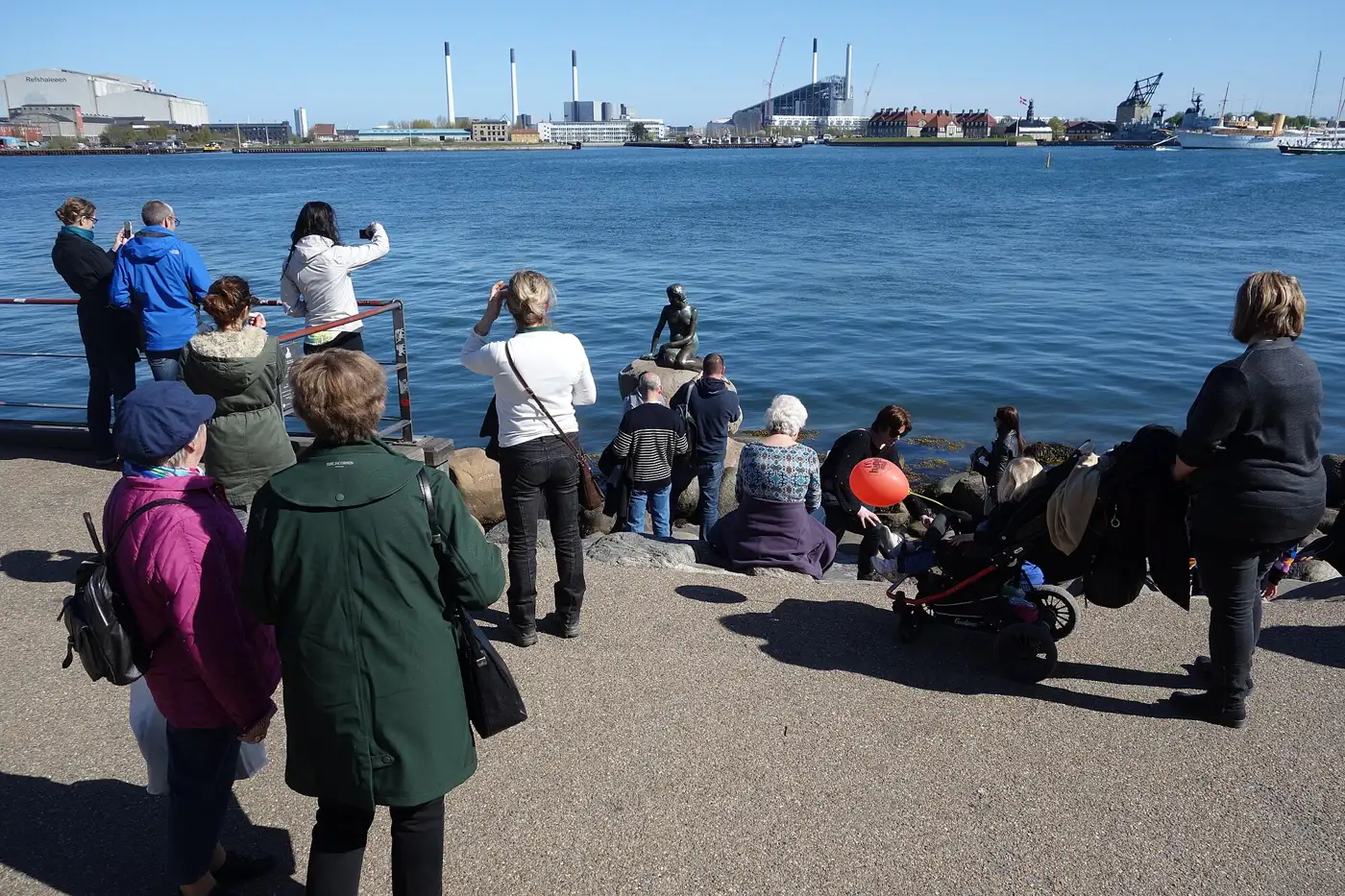
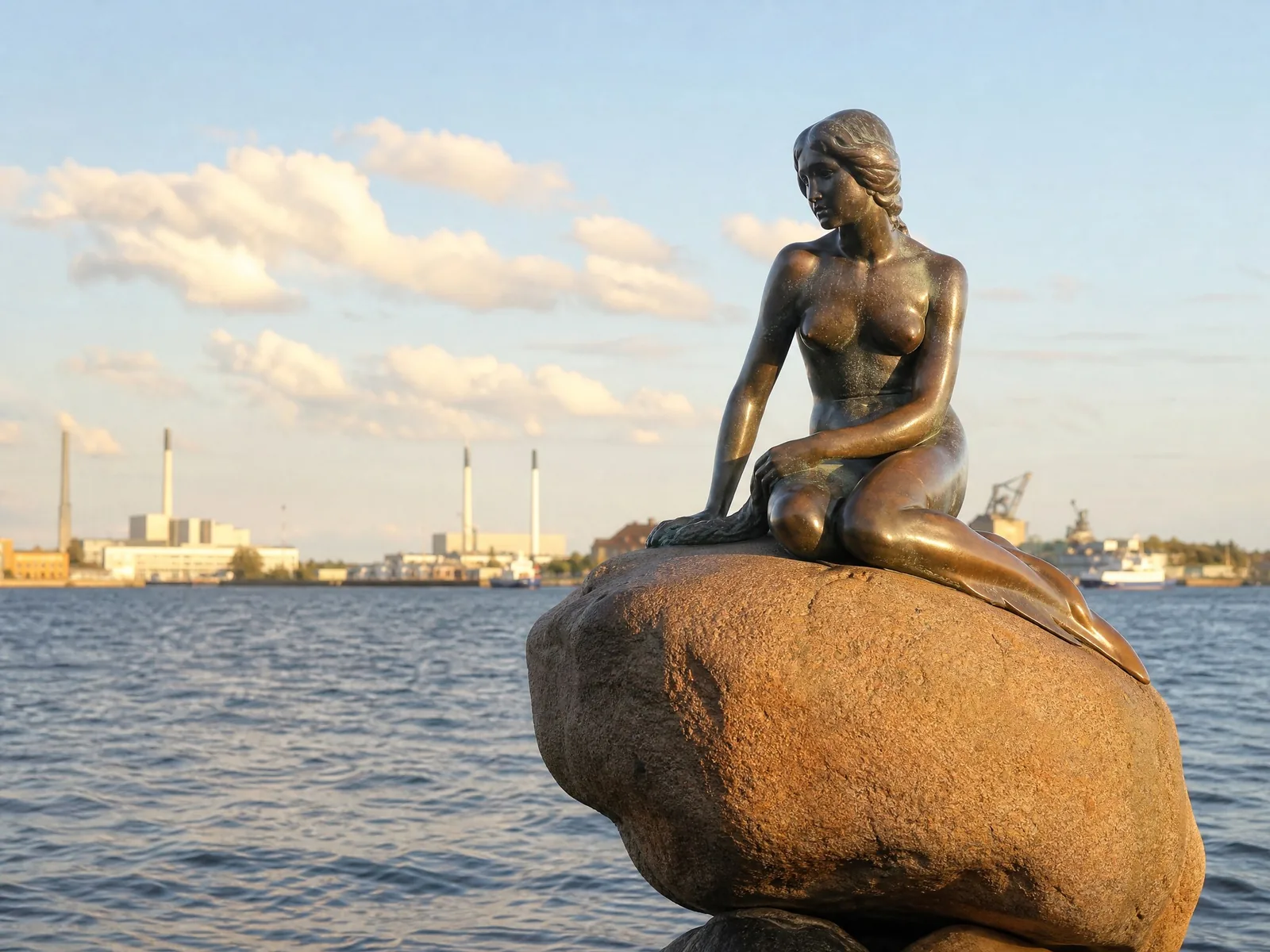
The Little Mermaid statue sits on a small rock about 10 to 15 metres offshore. She is made of bronze, cast in 1913 by sculptor Edvard Eriksen. The statue was a gift from Carl Jacobsen (son of the Carlsberg brewery founder) to the city, inspired by the Hans Christian Andersen fairy tale and a 1909 ballet adaptation. The model combined two people: Ellen Price posed for the head, and Eline Eriksen (the sculptor’s wife) modelled the body. At 1.25 metres tall, she is smaller than most people expect. Expect a crowd, especially midday July through August. You cannot touch the statue or go out to the rock; a low fence keeps visitors on the promenade, typically 10 to 15 metres away.
Kastellet fortress
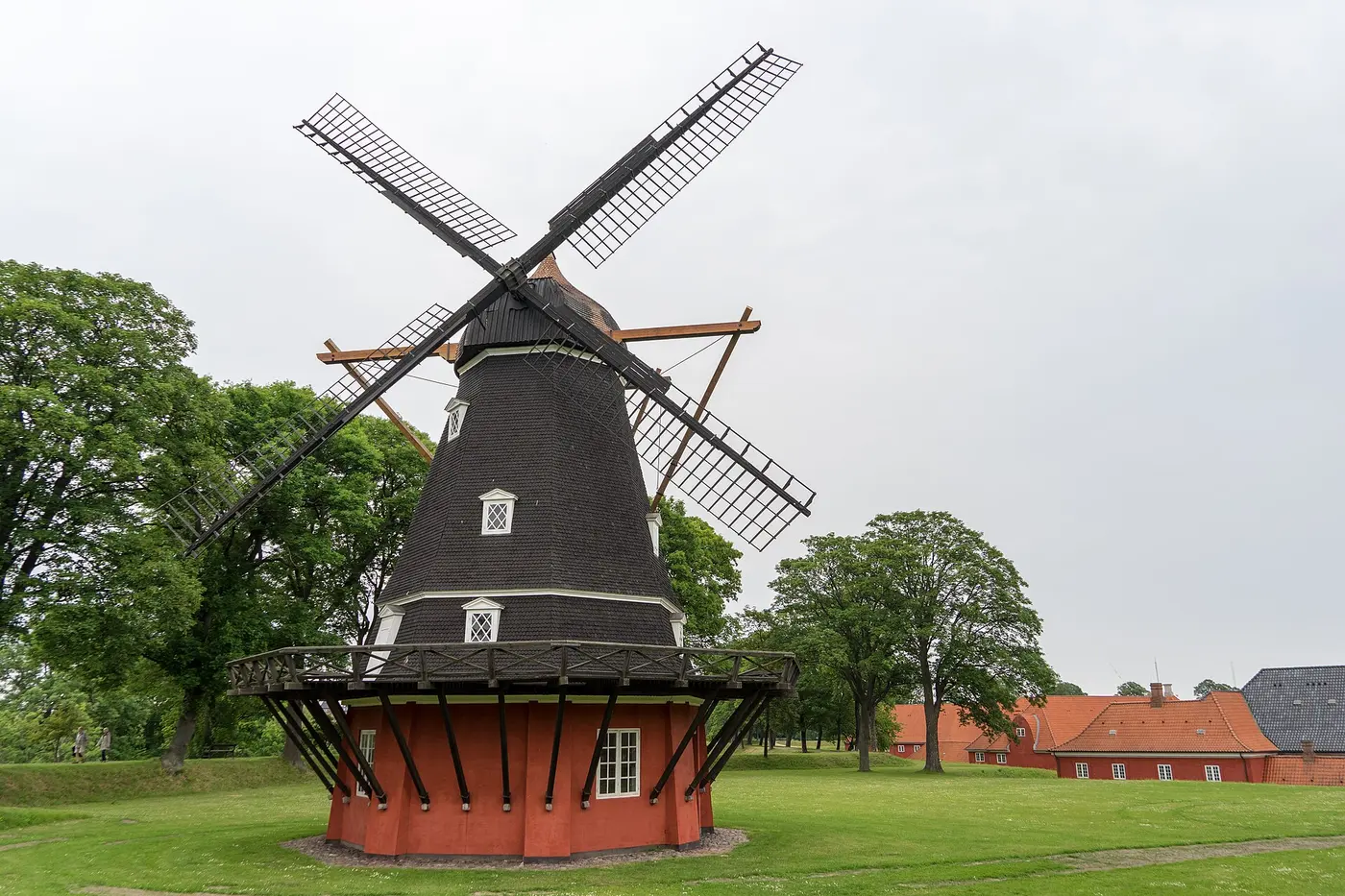
Kastellet is a 17th-century star-shaped fortress, built in 1664. It sits immediately north of the Little Mermaid promenade. The fort is still partly in military use, but visitors can walk the ramparts, visit the chapel, and explore the gardens. There is a working windmill (the only one in Copenhagen) on the grounds. Entry is free. The views from the ramparts are excellent. Honestly: Kastellet is more interesting than the Mermaid statue. Spend your time here if you have 45 minutes to spare.
The Langelinie promenade and the views
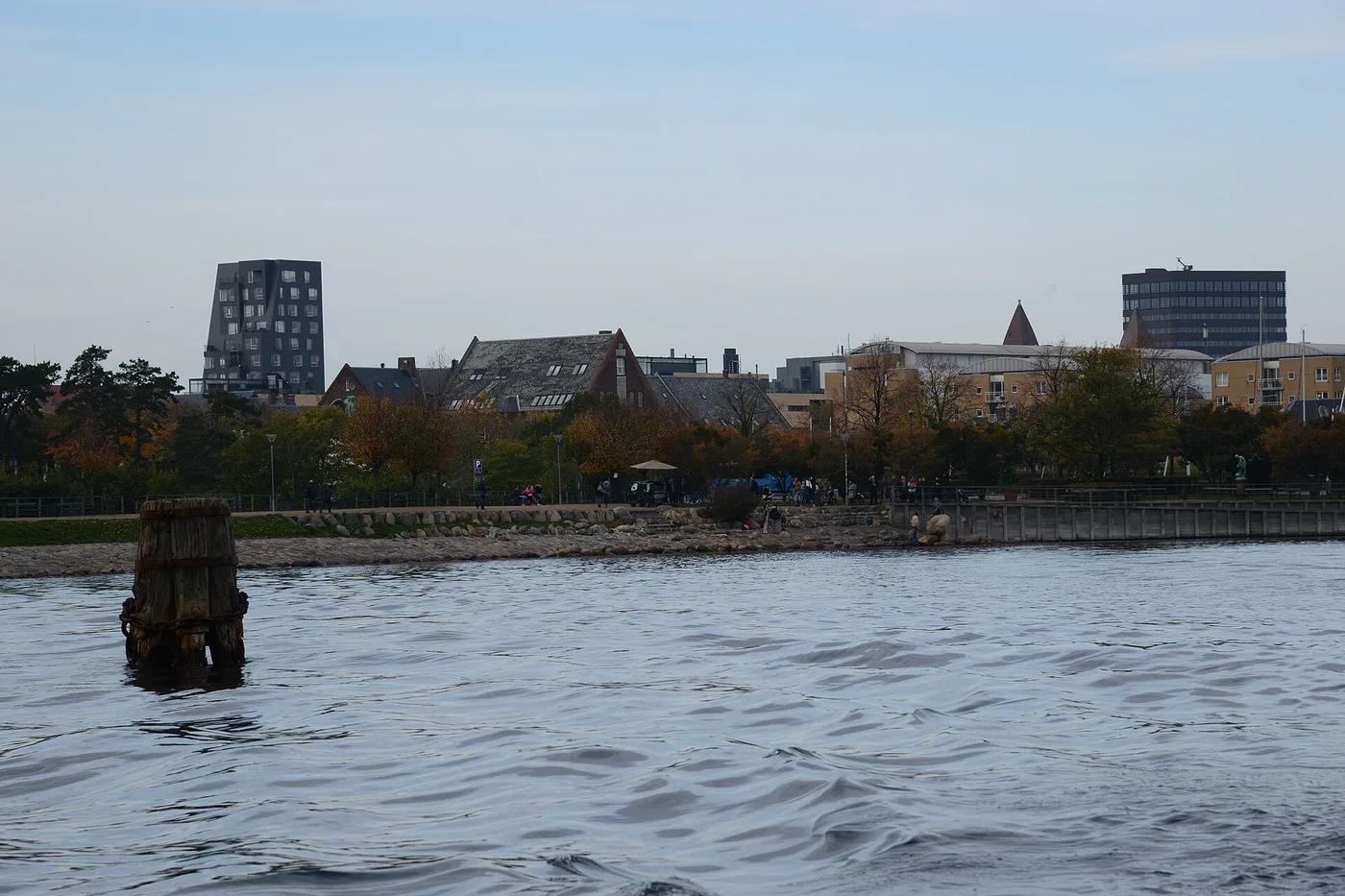
The Langelinie waterfront is a long, pedestrian-friendly promenade along Copenhagen’s northern harbour. On clear days, you can see across the Øresund Strait to Malmø, Sweden (20 kilometres away). The walk is pleasant and popular with locals; the Mermaid is just one stop along it. Walk north toward Kastellet, or south back toward the city centre. The promenade has benches, cafes, and a bike path.
Vandalism and the statue’s troubled history
The Little Mermaid has been vandalised repeatedly since 1913. The statue has been beheaded (1964, 1998), had its arm sawn off (1984), been covered in paint, and had its head replaced by a football helmet (2002). Each time, the city has repaired or replaced it. Graffiti is common. The vandalism is part of the statue’s unofficial history now. Modern CCTV monitoring has reduced incidents in recent years, but the statue remains a symbol of what tourists do when they get bored.
The original 1913 statue is in a museum; the one on the rock is a replica cast in 1967 (the second head is from 1998).
Best time to go
| Time of day / Season | What to expect |
|---|---|
| Early morning (6–8 a.m.) | Quiet, few tourists, best light for photos, locals jogging the promenade, serene. |
| Midday (10 a.m.–3 p.m.) | Peak crowds, tour groups, bright overhead light (bad for photos), chaotic, queues for selfies. |
| Late afternoon (3–6 p.m.) | Still busy, but thinning; better light for photos, fewer school groups. |
| Evening (6 p.m.+) | Locals return, tourists thin out, sunset views, peaceful, chilly in winter. |
| May to September | Peak season, very crowded, especially July and August; any clear day brings crowds. |
| October to April | Quieter, cooler, fewer tourists, but weather unpredictable; winter mornings are pristine and empty. |
How much time to spend
5 to 10 minutes to find the statue and take a photo. 15 to 30 minutes if you linger on the promenade. 45 minutes to 1 hour if you also visit Kastellet or walk the full Langelinie. Most visitors spend 20 to 30 minutes at the Mermaid alone, then move to Kastellet or head back to the city centre.
Getting to the Little Mermaid
By bus or bike
Bus 1A or 15 from the city centre (15 to 20 minutes). Or bike north along the harbour from the city (15 to 20 minutes). The promenade has bike racks. The Mermaid is NOT on the metro line; bus or bike are easier than metro + walk.
On foot from nearby attractions
From Amalienborg Palace (15 minutes north). From Nyhavn (20 to 25 minutes north via Amalienborg). From the city centre (30 to 40 minutes on foot; not recommended unless you’re already in the area).
Dos and don’ts
Do
- Arrive early (before 8 a.m.) or late (after 5 p.m.) to avoid crowds and get better photos.
- Walk the Langelinie promenade both directions; it’s a pleasant waterfront walk.
- Visit Kastellet fortress (right next to it); it’s free and genuinely interesting.
- Take the bus or bike; the walk from the city centre is long and unpleasant.
- On clear days, look toward Sweden across the strait — Malmø is visible on the horizon.
Don’t
- Don’t expect a theme park or Disney experience; it’s just a small bronze statue.
- Don’t plan a full hour at the statue alone; 20 minutes is enough (photos + Kastellet = 45 minutes total).
- Don’t try to climb the fence or swim to the rock; it’s illegal and dangerous.
- Don’t visit midday in summer unless you like crowds and harsh light.
- Don’t assume the statue is beautiful or impressive in person; it’s iconic, not beautiful.
Where to eat nearby
There are no restaurants or cafes right at the Little Mermaid statue itself, which is one of the site’s few drawbacks. Kastellet (100 metres away) has a small cafe with tables overlooking the harbour, serving coffee, sandwiches, and pastries (EUR 5 to 12). The Langelinie promenade has a few beer and soft-drink carts on weekends and in summer, but nothing substantial. For a proper meal, walk or bike south toward Amalienborg Palace (15 minutes, restaurants and cafes on the square) or Nyhavn (25 minutes, tourist-heavy but lively). A quieter option is the Nordhavn district (10 to 15 minutes south along the promenade), a newer waterfront development with modern cafes, bakeries, and restaurants, popular with locals and less crowded than Nyhavn. Recommendation: visit Kastellet’s cafe for a coffee (EUR 5) and a sit-down in the fortress, then continue south if you want lunch.
Nearby: what to combine with the Little Mermaid
The Mermaid is one stop on a larger waterfront walk. Combine it with: Kastellet fortress (immediately adjacent, 100 metres away, free entry, 45 minutes minimum to explore ramparts and windmill); Amalienborg Palace (15 minutes south via waterfront walk, watch the royal guard change at noon daily, free square); Nyhavn (25 to 30 minutes south from Amalienborg, restaurants, bars, and the canal atmosphere); canal cruise (see the Mermaid from the water; departs from Gammel Strand, south of Nyhavn); the Nordhavn waterfront district (10 to 15 minutes south along the promenade, modern development with cafes and restaurants, fewer tourists).
A realistic morning itinerary: Little Mermaid (7 or 8 a.m., 20 to 30 min to avoid crowds) + Kastellet fortress (30 to 45 min, cafe stop) + walk to Amalienborg (15 min walk south) + watch guard change (exactly noon, 15 to 20 min) + lunch or beer at Nyhavn (1 to 2 p.m., 45 min to 1 hour) = full 4.5- to 5-hour morning. This combines sightseeing, exercise, and food into one cohesive waterfront half-day.
Did you know? Five Little Mermaid facts
- The statue was sculpted by Edvard Eriksen in 1913 as a commission from Carl Jacobsen (Carlsberg heir), inspired by Hans Christian Andersen’s 1837 fairy tale and a 1909 Royal Ballet adaptation of the same story.
- The model combined two different women: the head was modelled by Ellen Price, and the body by Eline Eriksen, the sculptor’s wife. The original statue now sits in the Ny Carlsberg Glyptotek museum.
- The statue has been vandalised and decapitated at least five times since 1913 — in 1964, 1998, and others. The head was replaced with a football helmet in 2002 as protest art.
- At 1.25 metres (4 feet 1 inch) tall, the Little Mermaid is smaller than the average human, yet it is one of the most photographed statues in the world.
- Hans Christian Andersen’s original 1837 fairy tale ends with the mermaid sacrificing her life for love, without the happily-ever-after of the Disney film.
A short history
| Year | What happened |
|---|---|
| 1837 | Hans Christian Andersen publishes “The Little Mermaid” fairy tale in Denmark. |
| 1909 | Royal Ballet stages "Den Lille Havfrue" (The Little Mermaid); Carl Jacobsen attends and commissions a statue as a tribute. |
| 1913 | Sculptor Edvard Eriksen’s bronze statue is unveiled on Langelinie promenade on August 23. |
| 1964 | The statue is decapitated and the head stolen; Copenhagen is outraged. A new head is cast and installed. |
| 1984 | The statue’s left arm is sawn off by vandals; it is later recovered and re-attached. |
| 1998 | The statue is beheaded a second time; a new head (cast by Eriksen’s mould) is installed and has remained in place. |
| 2000s–today | Modern CCTV and harbour patrols reduce vandalism. The statue remains one of the world’s most iconic but also most underwhelming tourist attractions. |
Frequently asked questions
Is the Little Mermaid worth visiting?
Yes, if you set realistic expectations. It is a small statue, not a theme park. Plan 15 to 20 minutes, not an hour. It is free and close to other sights (Amalienborg, Kastellet).
Can I touch the statue?
Yes, many people do. It’s part of the experience (and possibly why it gets damaged so often).
Can I go to the rock with the statue?
No. There is a small fence around the rock. You view it from the promenade, typically 10 to 15 metres away.
Is there a shop or cafe near the statue?
No shops or cafes right at the statue. But Kastellet fortress (5 minutes walk) has a cafe. Amalienborg area (15 minutes south) has restaurants.
Can I swim nearby?
Not at the Mermaid promenade itself. But there are harbour swimming spots (Ishoj Strand, further north) if you want a swim.
What time is best to visit?
Early morning (7 to 9 a.m.) before tourists arrive. Or winter, when it’s quieter year-round. Avoid midday July to August.