Nyhavn Copenhagen: the colourful canal, what to do, where to eat (2026)
Ways to experience Nyhavn
Canal cruise from Nyhavn
A 1-hour boat tour departing Nyhavn (or nearby Gammel Strand) along Copenhagen’s canals. See Nyhavn from the water, pass Christiansborg, Amalienborg, and Kastellet. Included with Copenhagen Card.
Check ticketsFood tour through Nyhavn & Old Town
Guided 3.5-hour walk sampling local food and drinks on Nyhavn and in nearby Gamla Stan. Tastings included. Good for first-timers who want context and insider tips.
Check ticketsCity pass (24 h)
The 24–120 h card includes entry to 80+ attractions and all public transport. Nyhavn is free (it’s outdoors), but the card pays for itself if you visit castles or museums.
Check ticketsSelf-guided or group walking tour
Explore on your own (15 minutes to walk the quay) or join a 2-hour guided tour covering Nyhavn history, H.C. Andersen, and Old Town architecture.
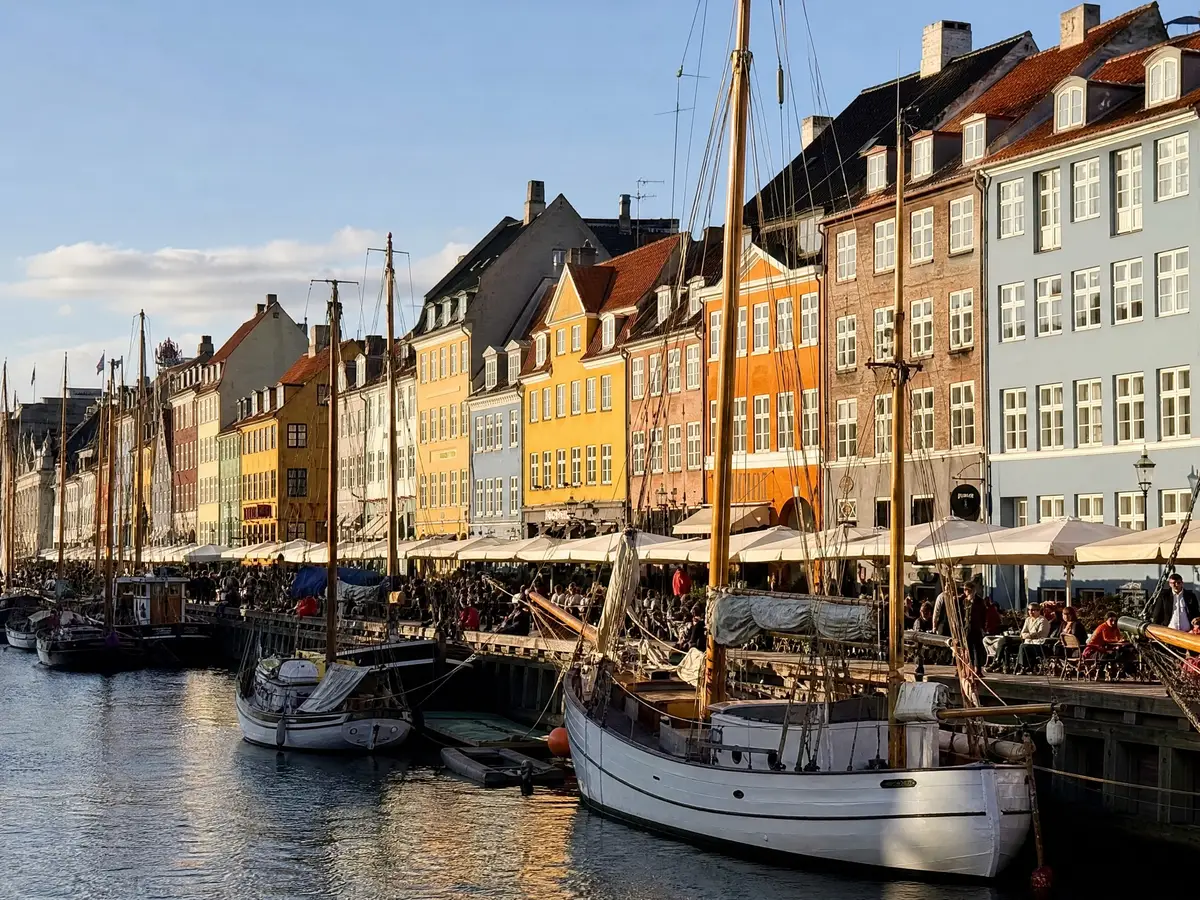
Check ticketsThe classic time to visit is 3 to 5 p.m. on a clear afternoon, when the north side townhouses catch golden light — this is when the postcard photos happen. Go early (8 to 9 a.m.) if crowds matter.
Highlights
- The north quay townhouses — brightly painted Baroque facades (red, yellow, green, blue) facing the water.
- Wooden sailing ships — old schooners moored at the quay, some now restaurants or private apartments.
- H.C. Andersen’s residence — the fairy-tale author lived at No. 20 and wrote his first stories there.
- WWII memorial anchor — a bronze anchor on the south quay honouring Danish sailors who died in the war.
- People-watching from a bar table — the primary local activity, done slowly with a beer or coffee.
What to see at Nyhavn
Nyhavn is walkable end-to-end in 10 to 15 minutes, but the real time goes to sitting, drinking, and photographing. The canal stretches 400 metres from Rødspor Bridge (north) to Havnegade (south), lined almost entirely with restaurants, bars, cafes, and historic buildings. The real experience is not rushing through but parking yourself at a table with a view and spending an hour watching Copenhagen flow past.
The north quay townhouses
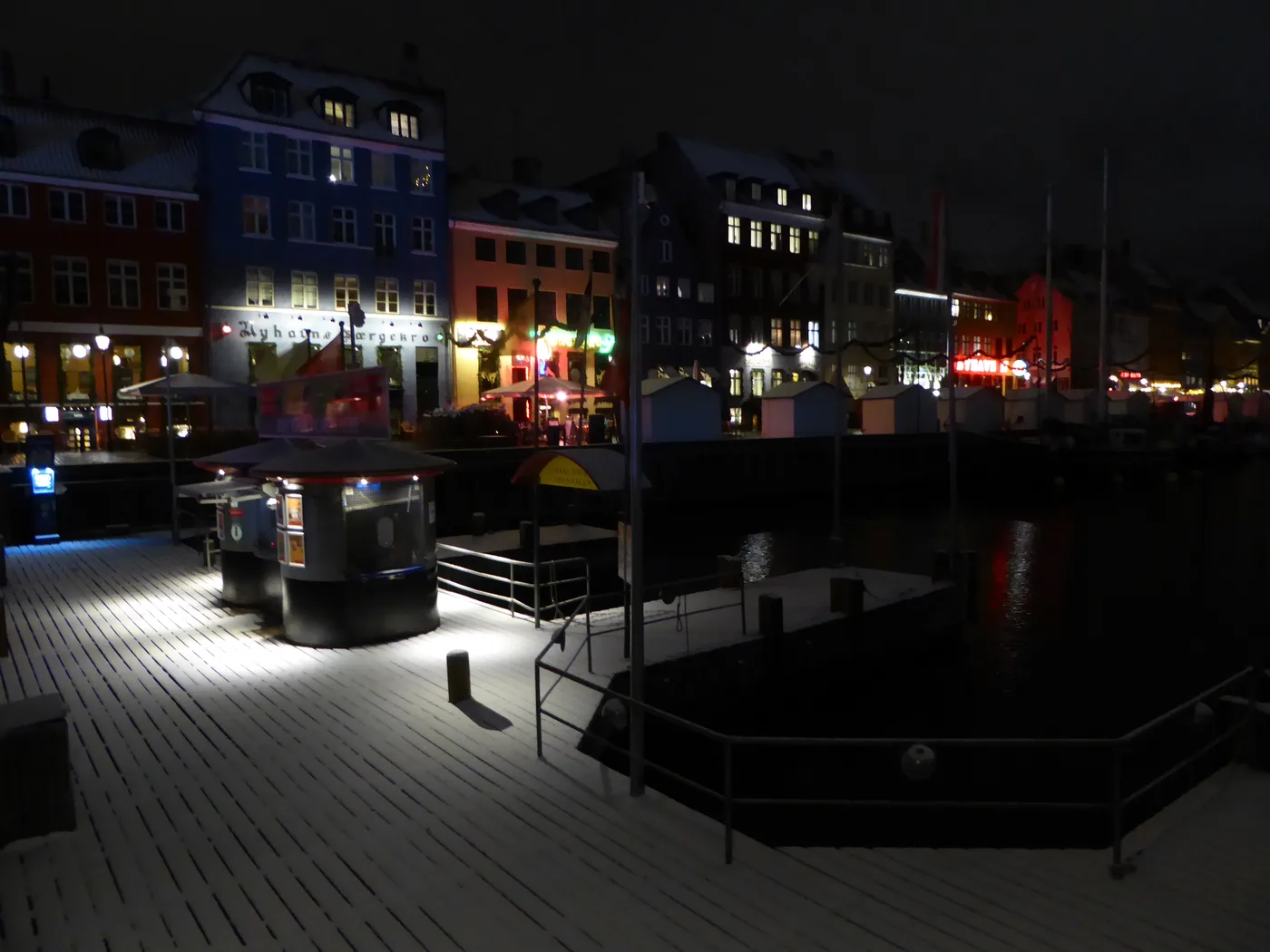
The 17th-century townhouses on the north quay were originally warehouses and merchant homes; today they are restaurants, bars, and luxury apartments. The original pastel colours — reds, yellows, greens, oranges — are carefully maintained. The north side faces south, so it catches light all day and is most photogenic in mid-afternoon when shadows are long. Pick a spot with a view and sit. Prices are high (EUR 20 to 35 for a main), but people-watching pays for itself.
The wooden ships and maritime history
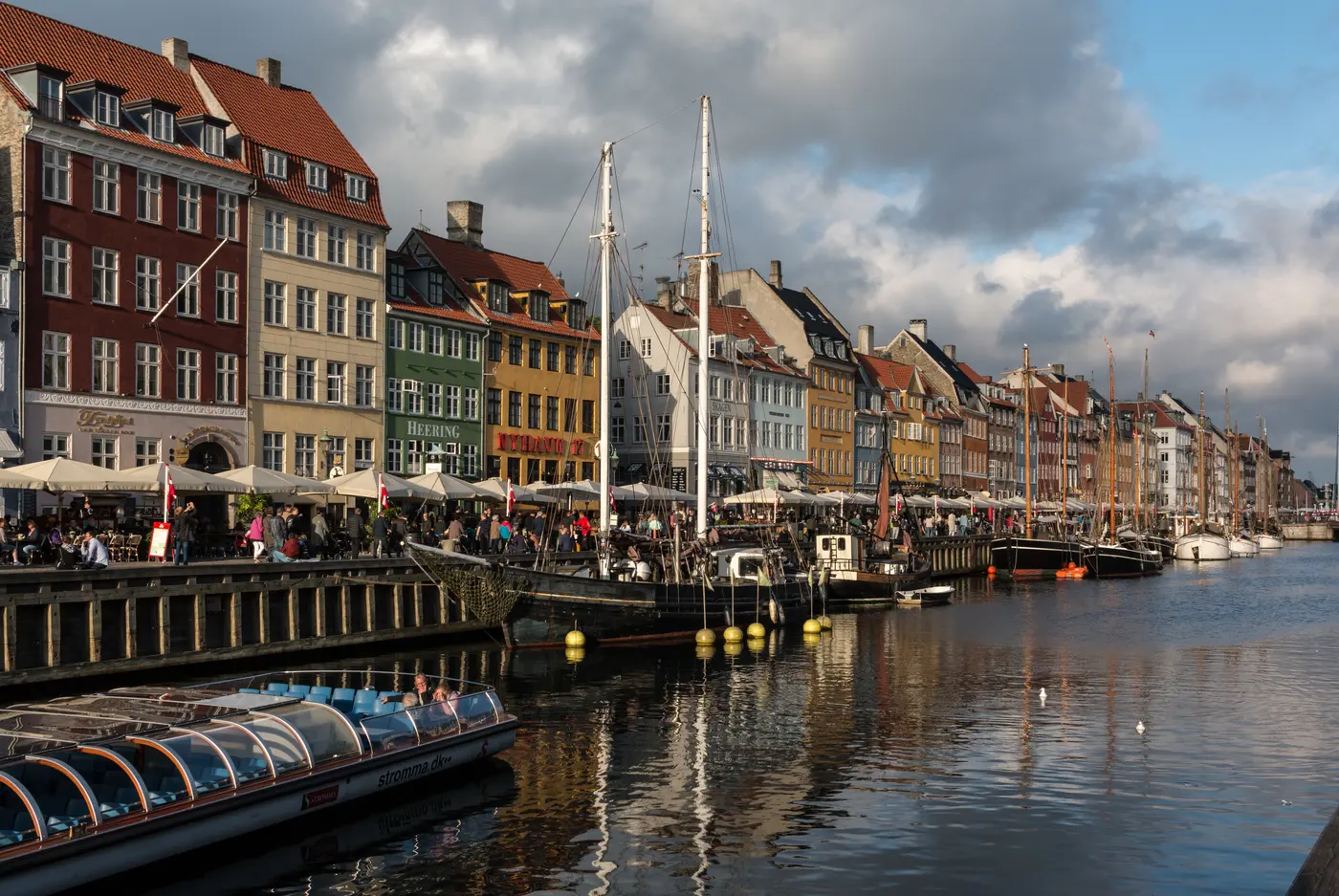
The wooden sailing ships moored at Nyhavn are working vessels and historic ships, now converted to restaurants (some), apartments, and studios. A few still take visitors aboard. The Nyhavn waterfront was the city’s commercial harbour from the 1670s until the 1950s; the ships are genuine survivors, not replicas. Wander the quays, look at the rigging and hulls, and step aboard if signage permits.
History: H.C. Andersen and the old city
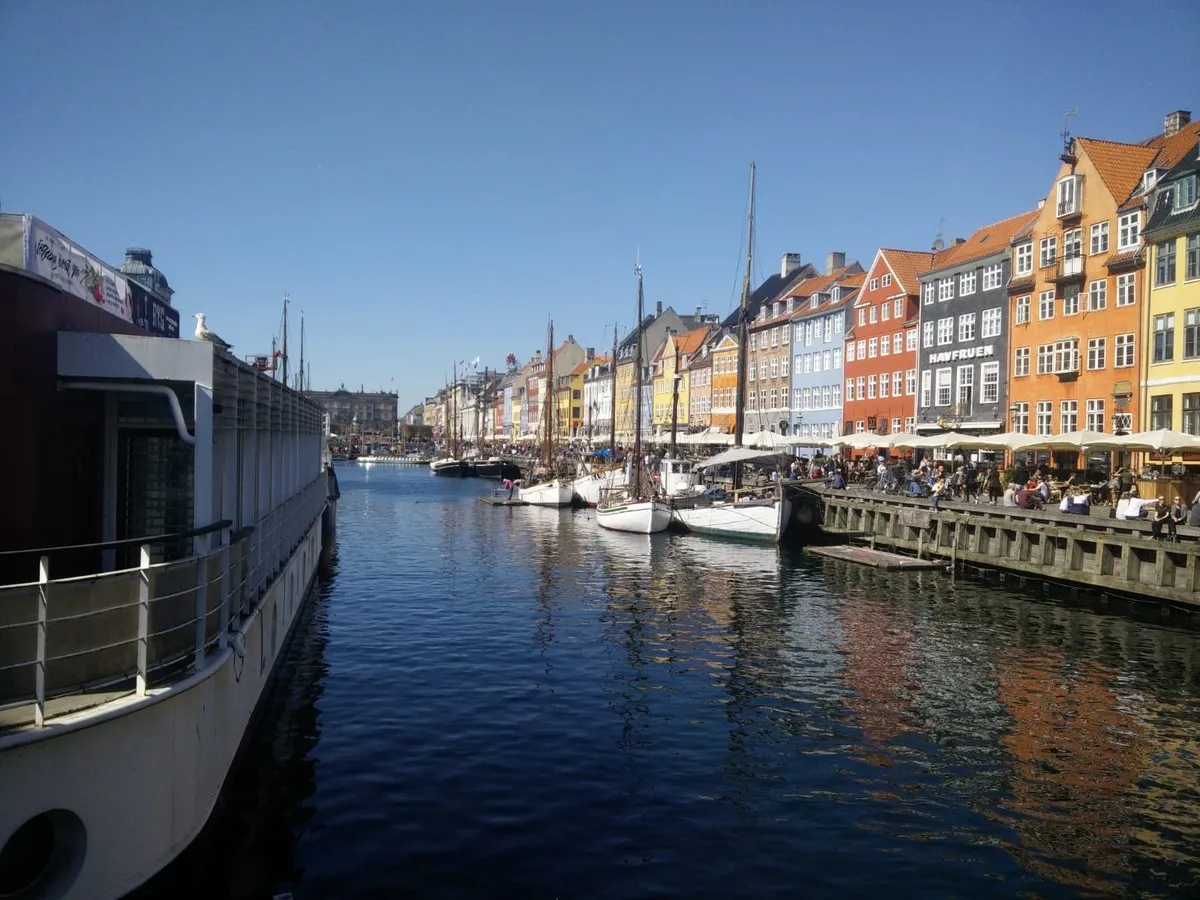
Hans Christian Andersen, Denmark’s fairy-tale author, lived at Nyhavn No. 20 (and also at No. 18 and No. 67) during the 1830s. He wrote some of his earliest stories here, drawing inspiration from the working harbour and the city beyond. Today a small plaque marks the house. The Nyhavn district itself is part of Copenhagen’s oldest neighbourhoods, where medieval streets (like Gamla Stan, just south) predate the canal by centuries.
What things cost on site
| Item | Price range | Notes |
|---|---|---|
| Beer (one glass, Nyhavn bar) | EUR 7 to 12 | Tourist tax applied; cheap beer does not exist here |
| Coffee (one cup) | EUR 4 to 6 | Slightly cheaper on side streets (Gamla Stan) |
| Casual meal (burger, pizza, fish) | EUR 15 to 25 | Most Nyhavn restaurants are in this range |
| Smørrebrød (open sandwich) | EUR 15 to 20 | Traditional Danish; sold from dedicated stands and cafes |
| Fine dining (3-course) | EUR 60 to 120 | Several high-end restaurants overlook the canal |
| Ice cream (one scoop) | EUR 4 to 6 | Chains and tourist stands; local flavours available |
Best time to go
| Time of day / Season | What to expect |
|---|---|
| Early morning (7–9 a.m.) | Quiet, few crowds, locals eating breakfast, best photography light. Bars not yet open. |
| Midday (11 a.m.–2 p.m.) | Busy with lunch crowds, tour groups, bright overhead light (not ideal for photos). |
| Afternoon (3–6 p.m.) | Golden light on the townhouses, peak hour for photo-taking, crowded but energetic. |
| Evening (6 p.m.+) | Locals and diners arrive, crowds thin slightly, restaurants light up, romantic atmosphere. |
| May to September | Peak season; fully packed on weekends. Cafe seating expands onto quay. |
| October to April | Quieter, cooler, fewer restaurants open, but still worth visiting on clear days. |
How much time to spend
15 to 20 minutes to walk the entire quay and take photos. 45 to 60 minutes if you sit and have a drink. 90+ minutes if you eat a full meal and linger. Most first-timers spend 45 to 60 minutes on Nyhavn alone, then move to nearby attractions (Amalienborg, Kastellet, or the city centre).
Getting to Nyhavn
By metro or bus
Metro M1 or M2 to Kongens Nytorv station (2 minutes walk to Nyhavn); this is the easiest option from anywhere in the city. Bus 1A, 9A, or 26 also serve the Kongens Nytorv area. Journey from the city centre: 5 to 10 minutes.
On foot or by bike
From Strøget and the city centre, it’s a 10-minute walk via Kongens Nytorv. From the Little Mermaid at Langelinie, it’s a 20-minute walk or bike ride south along the harbour. Bike racks are plentiful on the Nyhavn quays.
Dos and don’ts
Do
- Arrive around 3 to 5 p.m. for the best light and atmosphere.
- Sit at an outdoor table with a drink and watch people for 30 to 60 minutes; this is the core experience.
- Walk through Gamla Stan (medieval Old Town) just south of Nyhavn; better architecture, fewer crowds.
- Take the canal cruise from Nyhavn to see the waterfront from the water.
- Visit the WWII memorial anchor on the south quay; it’s small but historically significant.
Don’t
- Don’t plan a full meal at Nyhavn unless you want to pay a premium for location.
- Don’t visit between noon and 3 p.m. if crowds bother you; early morning or after 6 p.m. are quieter.
- Don’t expect world-class food; Nyhavn restaurants prioritise views over cuisine.
- Don’t skip the side streets (Gamla Stan, Latin Quarter, Fiolstræde); they have better shops and cafes.
- Don’t assume the ships are private; some are open to visitors or house restaurants — ask or look for signs.
Where to eat nearby
On Nyhavn itself (expensive, touristy): Most restaurants and bars line the quays, offering views and overpriced drinks. Prices EUR 20 to 50+ per main, with premium for waterfront seating. The food is mediocre by Copenhagen standards; you’re paying for location and atmosphere, not cuisine. Popular chains include Nyhavns Færgekro (fish), L’Artisan du Burger, and many forgettable pasta places. That said, a beer or wine at a Nyhavn table overlooking the boats is a quintessential Copenhagen moment, and many locals defend the experience.
Nearby Gamla Stan (better quality, lower prices): Five minutes south of Nyhavn, the cobblestone streets of Old Town have independent restaurants, cafes, and smørrebrød stands. Expect EUR 12 to 25 for a meal and far better atmosphere. Magstræde and Strædet are the prettiest streets, with flower boxes and low-lit restaurants. Around Kongens Nytorv: More casual options (pizza, burgers, coffee shops) with a mix of local and tourist prices, quieter than Nyhavn itself.
Specific recommendations: Smørrebrødbar (traditional Danish open sandwiches with quality ingredients, EUR 15 to 20, Gamla Stan), Café Kammakaze (casual cafe with strong coffee and pastries, EUR 8 to 15, near Nyhavn, local favourite), Nyhavns Færgekro (fish restaurant, EUR 30 to 50, Nyhavn quay, popular but pricey), Caphéh & Co (French-Danish fusion, EUR 18 to 35, side street, worth the walk).
Nearby: what to combine Nyhavn with
Nyhavn sits in the heart of the tourist quarter and is an excellent hub for a half-day or full-day itinerary. Combine it with: Amalienborg Palace and the royal guard change (5 to 10 minutes north, watch at noon daily); the Little Mermaid statue at Langelinie (20 minutes north via Amalienborg, take bus 1A if time is short); Strøget shopping street (10 to 15 minutes south, the city’s main pedestrian thoroughfare); Freetown Christiania autonomous zone (15 to 20 minutes south, alternative culture and flea market); canal cruise (departs from Nyhavn or nearby Gammel Strand, 1-hour boat tour, EUR 21); Christianshavn neighbourhood (just south across the bridge, colourful houses and waterfront restaurants). Our one-day itinerary combines Nyhavn + Amalienborg + Kastellet fortress + city centre shopping in 6 to 7 hours. For a longer stay, add Rosenborg Castle (Crown Jewels) or Christiansborg Palace (free tower) in the afternoon.
Did you know? Five Nyhavn facts
- Nyhavn was built in 1670–1673 by Swedish prisoners of war, who dug the entire canal by hand. It originally connected the harbour to the city centre for trade.
- Hans Christian Andersen lived at three different addresses on Nyhavn (No. 20, 67, and 18) and famously wrote: "I belong to Nyhavn as a poet belongs to it."
- The north side of Nyhavn is called the "sunny side" because it faces south and catches all-day light; the south side was historically less desirable.
- A bronze anchor memorial on the south quay honours 1,652 Danish sailors who died in World War II, placed by the government in 1950.
- The oldest house still standing on Nyhavn is No. 9, built in 1681 — over 340 years old and occupied as a restaurant and apartments.
A short history
| Year | What happened |
|---|---|
| 1670–1673 | King Christian V orders the canal dug by Swedish POWs from the Great Nordic War. It becomes a major trade harbour. |
| 1680s–1750s | Merchants and ship captains build townhouses on both quays; Nyhavn becomes the commercial heart of Copenhagen. |
| 1830s | Hans Christian Andersen lives on Nyhavn and writes fairy tales; the district is at its cultural and economic peak. |
| 1900s–1950s | Nyhavn remains a working harbour, but cargo shifts to other ports as the city expands. The quays decline into slums. |
| 1960s–1980s | Gentrification begins; historic buildings are restored, restaurants and bars open, artists and bohemians move in. |
| 1990s–today | Nyhavn becomes a global tourist destination, particularly after the iconic harbour photo spreads on postcards. It remains a working commercial waterfront. |
Frequently asked questions
Is Nyhavn worth the hype?
As a photo stop: yes. As a place to eat: no (overpriced and touristy). Go for 30 to 60 minutes, take photos, maybe have a drink, then move on.
Can I swim in Nyhavn?
Not officially. There is a harbour swimming spot called Nyhavn Badet (separate location, south of Nyhavn quay) if you want to take a dip.
What ships are moored at Nyhavn?
Old wooden sailing ships and commercial vessels. Most are private apartments or restaurants now. You can board some for a restaurant reservation.
Is Nyhavn safe?
Yes. It’s heavily touristed and well-lit. Use normal city sense (watch your bag, don’t leave phones unattended).
Can I combine Nyhavn with other sights?
Yes, it’s 5 to 10 minutes walk from Amalienborg Palace (royal residence), Kastellet (Little Mermaid nearby), and the city centre. Do Nyhavn + Amalienborg + Kastellet as a 2-hour walk.